At this moment we don't have any surplus produce from our land to share. Please stay up to date with our workshops, consults and blogs in the meantime. DismissSkip to content
Plant trees & rewild the planet!
Forest edges are the most robust, nutritious, biodiverse systems on land. Forests manage fresh water availability, reduce CO2, manage their own healthy balance and cool the planet. Yet humans destroy 41 million trees every day. Let's rewild barren land, swap monoculture farming for mixed systems, stop the use of pesticides and plant one tree at a time.
Forest edges are the most robust, nutritious, biodiverse systems on land. Forests manage fresh water availability, reduce CO2, manage their own healthy balance and cool the planet. Yet humans destroy 41 million trees every day. Let's rewild barren land, swap monoculture farming for mixed systems, stop the use of pesticides and plant one tree at a time.
Animals play an important role in regenerative landscapes.
But their presence must remain balanced.
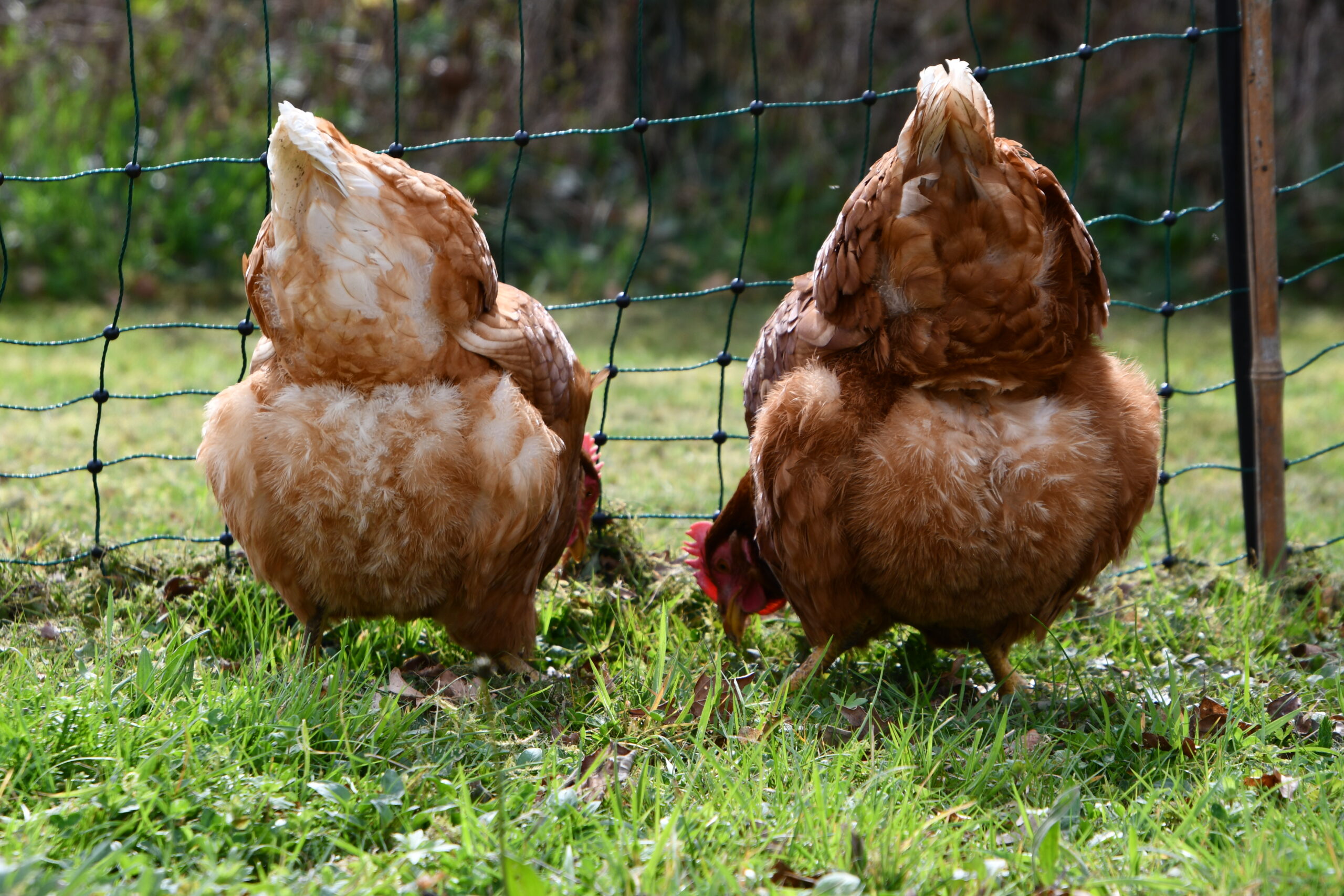
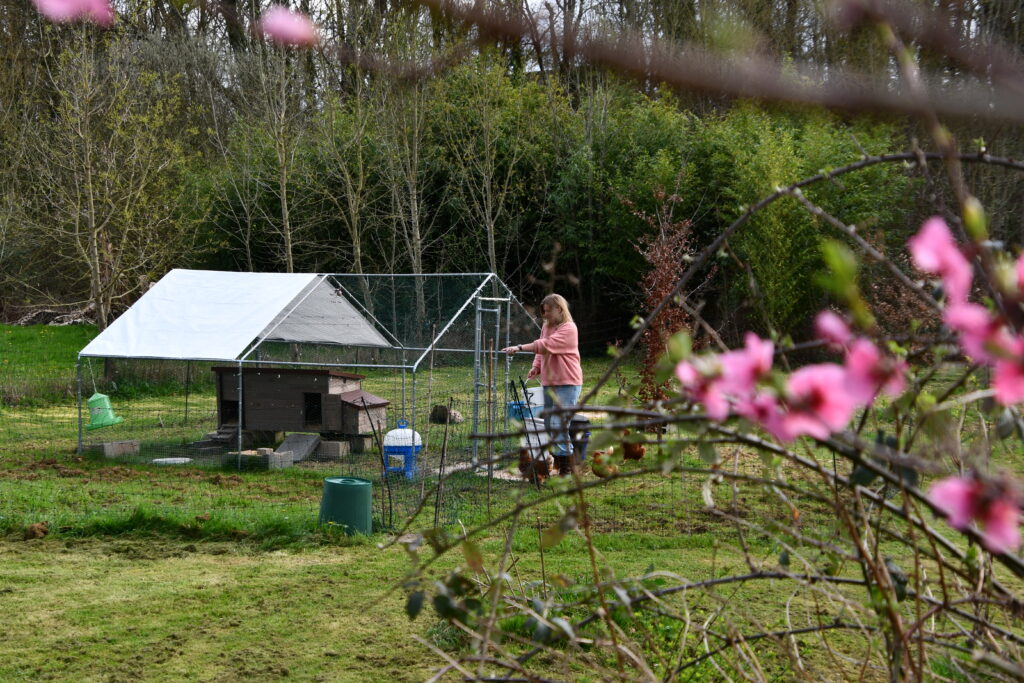
At Val de Foy, we introduced chickens to become essential partners in working the land.
Why Chickens Are Perfect Permaculture Animals
Chickens provide multiple benefits simultaneously:
eggs
natural fertiliser
pest control
soil aeration
They convert kitchen scraps and garden waste into valuable nutrients for the soil.
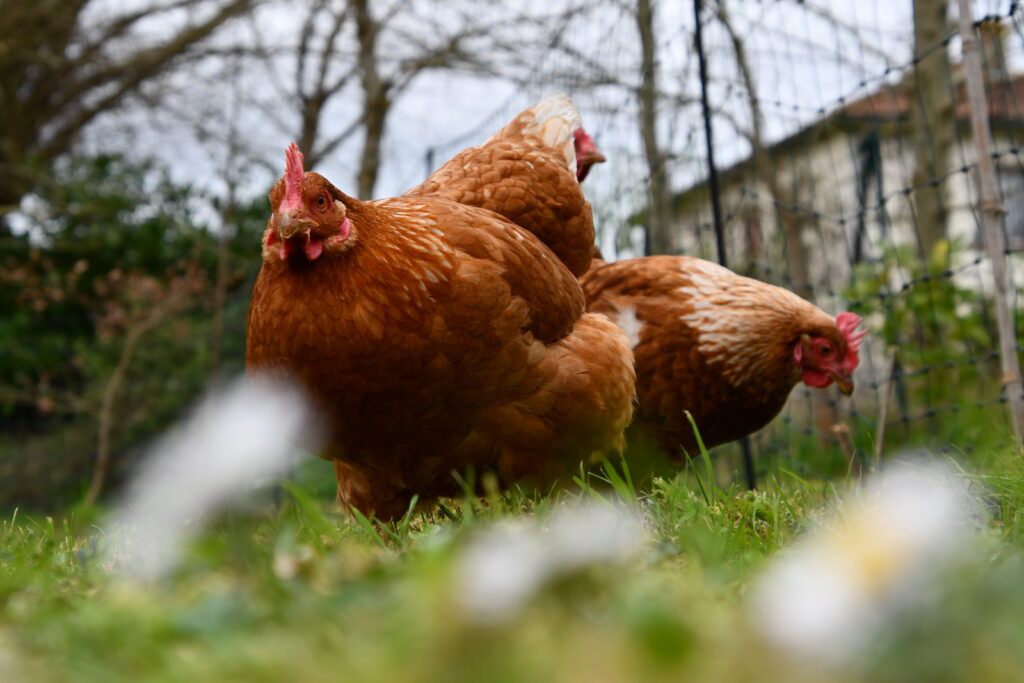
They love roaming through the weeds and grass and around trees in orchard areas, they scrape the soil searching for foods, helping to balance insect populations, while fertilising the ground.
There are a lot if things to learn about how chickens form a perfect group, and perform natural behaviour. For example, chickens that come from eggproduction facilities have lost their ability to tend for their eggs. Quite simply because they don’t have older chickens in the group to teach them. My chickens, are retired chickens from such a facility. I enjoy them living a very free and adventurous life on my land. They are very social animals and fun to have them around. They tend to follow me around everywhere. I guess they feel I am the head chicken.
The Question of Cattle
Large livestock such as cattle, goats or sheep require far more resources.
Extensive grazing areas and methane emissions raise important ecological questions.
In regenerative systems, livestock numbers must remain carefully balanced with the landscape. As my permaculture teacher once told me, one cow per 5 hectares would be about enough. And because they love to travel in herds, you can imagine what amount of land a herd of 10 to 20 cows would need.
From this perspective it seems ridiculous what modern farms are doing in terms of intensive cattle farming. This knowledge also makes you raise an eyebrow when you consider the popularity of reintroducing cattle to national parks. I particularly felt very critical about a herd of Scottish cattle introduced to a park area in Rotterdam, in the Netherlands. The space they have is just a few strips of land around community gardens and sportfields. This space is also shared with a lot of commuters and public visiting the park, sometimes with loose dogs or children wanting to pet these big animals. This can trigger dangerous situations, especially when a herd has young calfs that they want to protect.
It should be considered, that a herd on a small plot of land produces enormous clustered amounts of waste, which disbalance the soil. The popularity of introducing herds of cattle to city parks reveals how urban communes sometimes try to force natural elements into a small piece of land without really considering it’s impact on the little nature there is.
Further more I see a lot of farming examples where calfs are seperated from their mothers for human centered milk production. These herds also don’t have males to manage the balance in the herd. And herds are kept partially inside or on grass land. This is natural behaviour for mothers who need protein rich grasses to produce enough milk for their calfs, but normally they would prefer to stay in forest areas where they have a diverse diet. Here in the Dordogne I see various examples where the owners respect the natural behaviour of a herd, and keep a mixed herd in a forest or in a forest edge system. This is unfortunately a different story in the Netherlands.
From a permaculture perspective we would be very critical of introducing a herd to a system. We would need to make sure there is sufficient land and resources for them. Perhaps it is something in which neighbouring permaculture farms could cooperate. The same would count for sheep or goats. One of the major issues with sheep or goats in grassy areas is that they are prone to hoof diseases. For sheep I would say from a permaculture perspective, they belong in hilly to mountainous areas.
Animals are wonderful creatures, but it’s necessary that people are aware that they need to think about what role the animals will play on the land and in the system, and if they actually fit. Don’t get me wrong, in Permaculture we are not particularly against animals, nor profiting from what they can add in our diet. It is about managing a balance, that works for both the animals, the system and us.
How Much Meat Do We Really Need?
Nutrition research increasingly suggests that most people require far less meat than typical Western diets provide.
Roughly 150 grams of meat per week can already supply many essential nutrients.
In a regenerative food system, meat becomes a complement rather than the centre of every meal. Having animals on the land shouldn’t be centered around meat production but more about respecting their place in ecosystems.