When people visit Val de Foy, they sometimes assume my interest in biodiversity began in relation to moving to France.
In reality, it started much earlier.
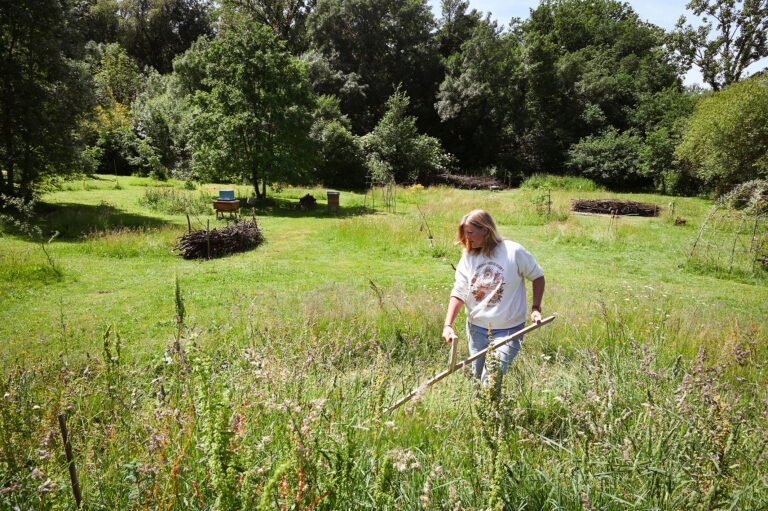
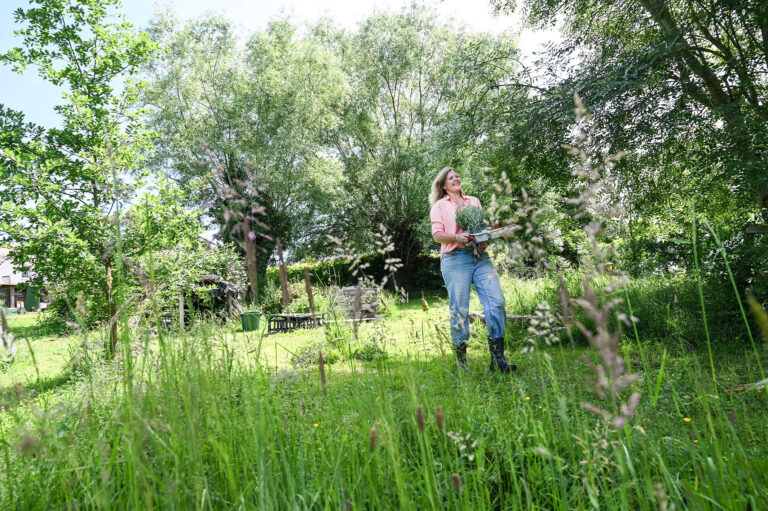
Before my latest ‘regreen’ project in the Dutch City of Rotterdam, I had already spent a year transforming a 3,500-square-metre piece of land in the Rotterdam district of Lage Land into a young food forest, complete with a marsh pond. What had once been an ordinary open space slowly became a place where birds nested, amphibians appeared, insects flourished and edible plants found their place alongside native vegetation.
That project taught me how quickly nature can respond when diversity is given room to return. My latest initiative in the Rotterdam district op 110-Morgen, became a natural continuation of that journey.
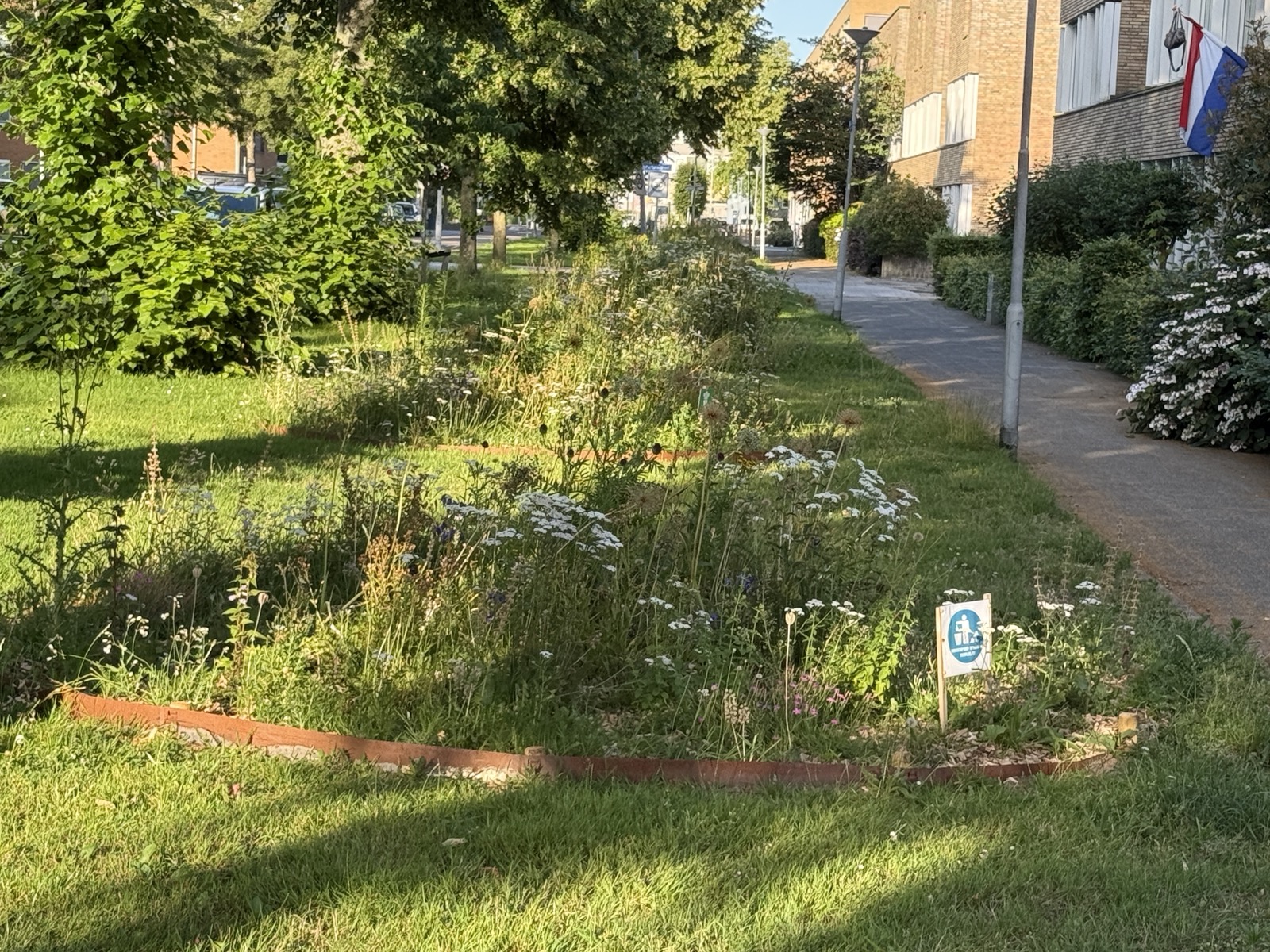
This time, instead of restoring a single piece of land, the challenge was different: could we inspire an entire neighbourhood to transform more than 100 metres of intensively mown grass into a flowering habitat for pollinators? Like so many urban green spaces, it looked tidy and well maintained, but ecologically it offered very little. There were hardly any flowers, almost no shelter, and few food sources for pollinators. It was green, but it wasn’t very alive.
My knowledge about regreening spaces, inspired me to try and get the neighbourhoods hands together to turn these lawns into B&B’s for insects.
Not by creating a perfectly designed park. But by restoring diversity.
That question became the starting point of a neighbourhood initiative that brought together residents, local organisations, businesses and the Municipality of Rotterdam. Together, we transformed more than 100 metres of ordinary grass verge into a flowering habitat for bees, butterflies and countless other insects.
In total, we planted more than 6,000 naturalising flower bulbs and native perennial plants, representing over 60 different species. The planting was carefully designed to create a succession of flowering throughout the year. Early spring bulbs provided the first nectar of the season, followed by layers of native plants of different heights, colours and flowering periods.
The goal wasn’t simply to make the street more beautiful.
It was to create a place where life could return.
One of the most rewarding moments came on planting day, literally a week before I left to France. On this day everything had to come together, so I could leave behind my project in other people’s hands.
More than fifty local residents—children, parents, neighbours and retirees—worked side by side with spades, rakes and wheelbarrows. Some had never planted anything before. Others simply wanted to help make their neighbourhood a little greener.
Watching so many people work towards a shared goal reminded me that ecological restoration is rarely just about plants. It is equally about people. Lasting change happens when communities feel connected to the places they live. People care more than we often assume—they simply need an opportunity to contribute.
But the biggest lesson became apparent this year.
Nature hadn’t disappeared. It had simply been waiting for the right nudges.
Recently, I returned to the site.
The transformation was remarkable.
The first flowering bulbs had already finished their display, making way for the native perennials. Different species were flowering one after another, insects were everywhere, and what had once been an ordinary strip of grass had become a living ecosystem.
Standing there, I realised something that will stay with me.
Before the project, it was easy to look at those grass verges and conclude that nature had disappeared.
But that wasn’t true.
Nature hadn’t disappeared.
It had simply been waiting.
Waiting for food.
Waiting for shelter.
Waiting for diversity.
Waiting for the opportunity to return.
Within a relatively short period, bees, butterflies and countless other insects are now rediscovering the area. We nudged nature—we added diversity and removed some of the conditions that had been preventing nature from flourishing.
These experiences make me hopeful about ecological restoration.
Working with resilience
It is easy to become discouraged by the environmental challenges we face today. Urbanisation continues to replace natural habitats. Intensive agriculture simplifies landscapes that were once rich in life. Pollinators are declining, soils are degrading, and many ecosystems are under increasing pressure.
These are real challenges.
But the Rotterdam project taught me something equally important.
Nature possesses an extraordinary capacity for resilience.
When we restore healthy soils, increase biodiversity and create the right conditions, living systems often recover far faster than we expect. We don’t have to control every outcome or engineer every solution. Nature already knows how to heal. Our role is to create the conditions that allow that healing to begin. And getting our mindsets in the right direction can help change things in relative short periods of time.
That is one of the central ideas behind Val de Foy. I want to teach people about permaculture, the pragmatism of it. It is not just a philosophy, or some vague vision, it helps to re-see, what we were missing all along. And I want to let people experience the resilience of nature. If we read the land properly and give it the right nudges, we boost it’s restorative power.
Rather than forcing landscapes into submission, we learn to observe them, understand them and work alongside the natural processes that have been evolving for millions of years.
Carrying the lesson to Val de Foy
Today, as I develop Val de Foy in southwest France, I will often think back to my projects in Rotterdam. Where I helped to re-introduce nature into heavily urbanised surroundings. Where people designed cities around people and not allt he other living species with which we need to share the planet.
The landscapes may be very different, but the lesson remains exactly the same.
We can rebalance ourselves with nature, help restore what is lost, re-evaluate the importance and meaning of sharing life with all those other species of plants, insects and animals around us..
Diversity = health.
Diversity = resillience.
When soil is cared for.
When people choose to work with nature instead of against her.
Sometimes, all life needs is an invitation to come back.
It can begin in a forgotten strip of grass.
Inspired to join the regenerative movement?