At this moment we don't have any surplus produce from our land to share. Please stay up to date with our workshops, consults and blogs in the meantime. DismissSkip to content
Plant trees & rewild the planet!
Forest edges are the most robust, nutritious, biodiverse systems on land. Forests manage fresh water availability, reduce CO2, manage their own healthy balance and cool the planet. Yet humans destroy 41 million trees every day. Let's rewild barren land, swap monoculture farming for mixed systems, stop the use of pesticides and plant one tree at a time.
Forest edges are the most robust, nutritious, biodiverse systems on land. Forests manage fresh water availability, reduce CO2, manage their own healthy balance and cool the planet. Yet humans destroy 41 million trees every day. Let's rewild barren land, swap monoculture farming for mixed systems, stop the use of pesticides and plant one tree at a time.
It can be heavy, compact and slow to drain. Many gardeners assume it is poor soil.
But clay actually holds tremendous fertility.
The area where I bought my land is also called the ‘Perigord Pourpre’, the ‘purple Perigord’. Why? Because this area is known for it’s vineyards and plum orchards. Generations before me already knew, that this was one of the most fertile areas of the Dordogne. An area with many rivers, which brought fertile clay sediments to the area. When I bought the land this was mostly an intuitive decision. I did not have the luxury to dig a whole in the garden of the sellers of the land, to do soils research. I had a hunch that it might be clay. Normally this might put some people of. But perhaps I was blessed with my own naievety, I truly believe as a Permaculturist, that any soil can be worked with. It’s a question of patience and building up the soil.
When I saw what the previous owners had tried to do, start a fe raised beds for vegetables, with thick layers of mulch…I realised that they didn’t know what I know. Compost and mulch can be an aid, but can also smother the land. Compost should never be thicker than 2 centimeters. And mulch non the less. And I didn’t want to raise beds above the ground, but acgtually feed the land so it would transform it’s soil layers to benefit the whole land.
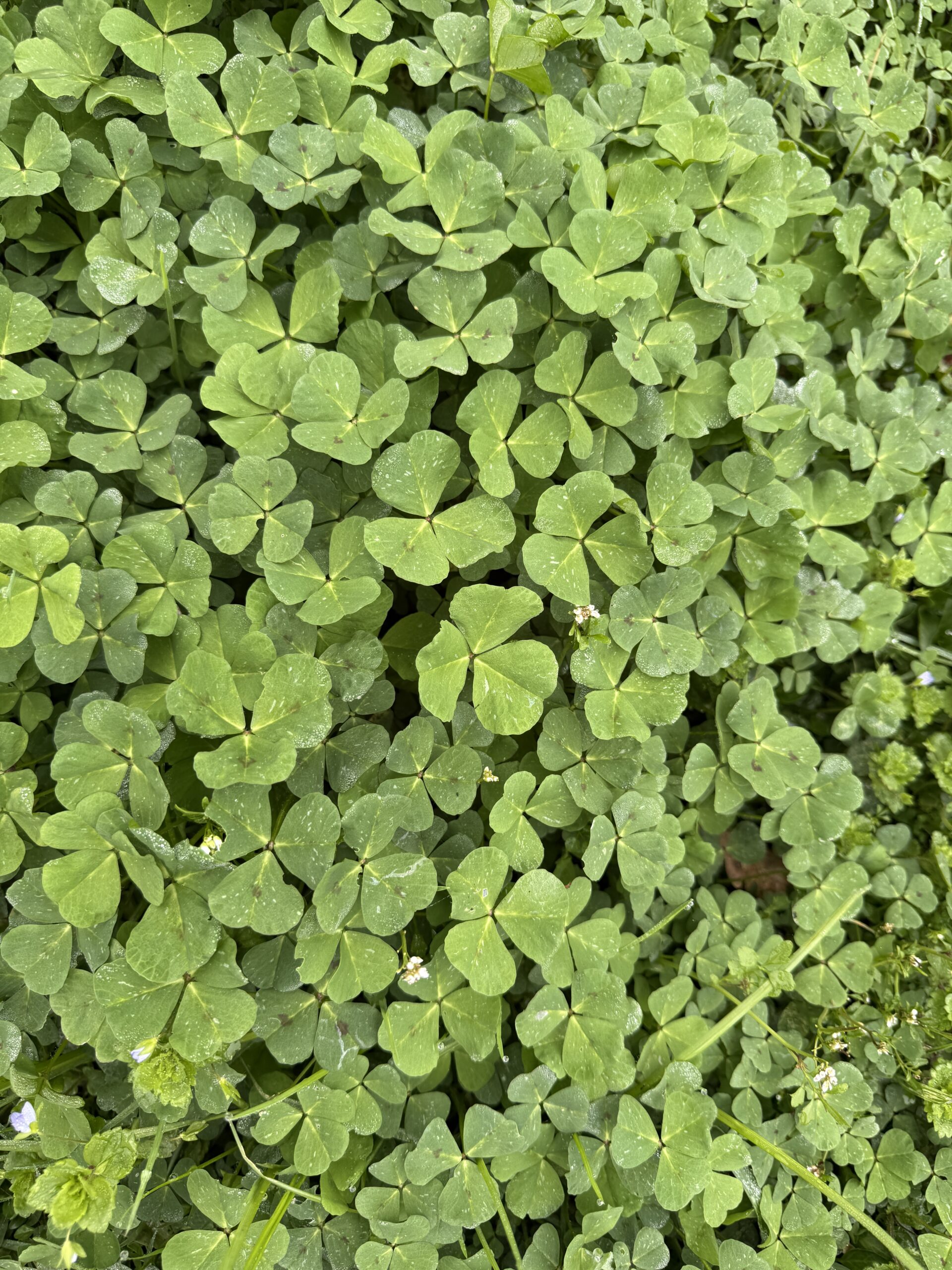
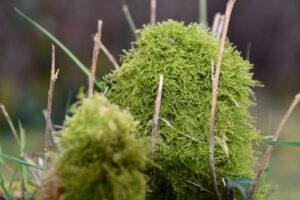
So when I first began working parts of Val de Foy, I noticed that large areas of the soil were either soggy or dense clay covered with grasses. But if you look closely, also lots of clover and mosses. The mosses reveal where the clay is too compact, moist and has littler sunlight, whilst the clover reveals the areas where it wants to enrich the soil structure. To feed the mossed areas, it needs more organic debree. And what better way to do that, than to plant trees that shed their leaves, open the ground with their root networks, and loosen the soil and help to drain it.
Obvioulsy the growth of these trees needs patience, but having planted them means that the soil will be able to build itself up over the coming decades. Transforming it into living topsoil required patience and an understanding of how soil ecosystems function.
Why Clay Soil Is Valuable
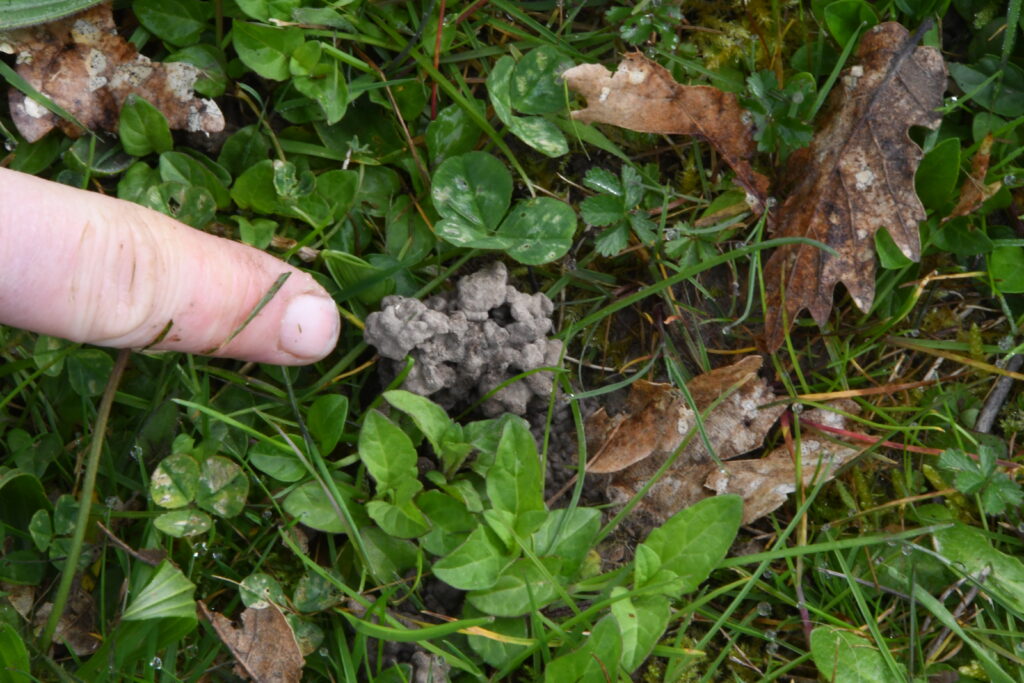
Clay particles hold nutrients extremely well. The challenge is improving the soil structure so roots and organisms can move through it easily. So we don’t want to remove it, but cherish it, nudge it a little by adding plants that will improve the structure. Also allowing animals and other living species to do their work. The soil at Val de Foy is extremely rich in worms doing all that drainage work for us. When I saw the first mole’s heap on the grass, most gardeners would be dissapointed, but I am happy that they are showing themselves here, because they will improve the structure of the land.
Another thing to take into consideration is limiting the use and access of these soils to heavy machinery. In the past the land was agricultural land, and heavy tractors worked the land. Now, the land had been maintained with a slightly heavy sitmower. But at Val de Foy we also work the land with handheld scythes, and patches where we don’t mow. This helps the soil to build up.
Once the structure improves, clay soils can become incredibly productive.
Building Soil With Organic Matter
So again, the first step is simply feeding the soil.
Layers of organic materials are continuously added when available:
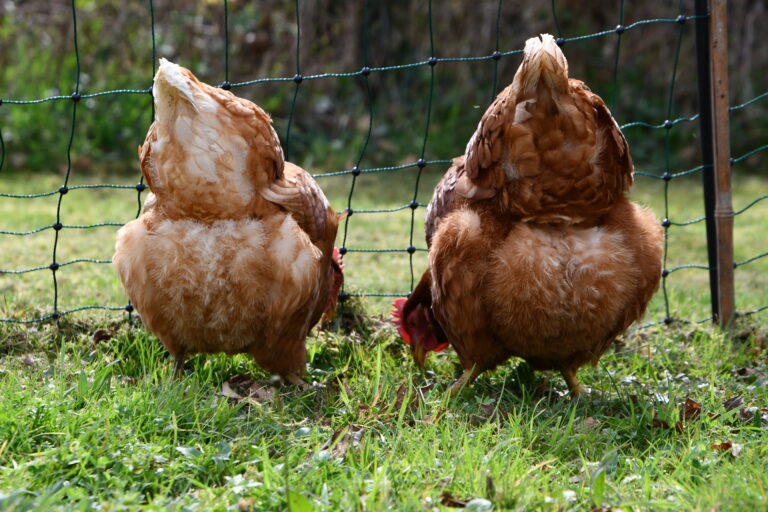
straw, bedding from the chicken coop.
grass cuttings
leaves, from the planted trees
compost
chipped branches, helping fungi networks to appear and help the soil structure around the trees and planted bushes.
These materials slowly decomposed and feed the microorganisms responsible for soil fertility.
Letting Soil Life Do the Work
Instead of digging deeply, the focus is on encouraging natural soil life.
Earthworms will pull organic material into the ground. Their tunnels improve aeration and drainage.
Fungi spread through the mulch layers, forming networks that help plants absorb nutrients.
Over time, the soil structure will change.
I have to admit, in one or two small patches we did plough a little land, to battle against the grasses. The theory is that when you keep removing grass, it will eventually ‘give up’, allowing for vegetable beds to be planted. Because the surrounding soils are healthy, they will naturally spread their strengths to the disturbed soils. It is not something you would particularly want to do in a permaculture system, but you have to allow yourself to be human and sometimes needing to speed things up. In permaculture we try not to abide by doctrines, and leave room for experiment. If you do this in a generally healthy system, the impact of disturbance or manipulation will be better handled by the land. And if not…the feedback from the land will tell you, indiscrimenantly.
Using Pioneer Plants
Certain plants help improve soil conditions, and quite usually they are already there doing the work for you.
Nitrogen-fixing plants such as clover and beans enrich the soil naturally while their roots break up compacted layers. At Val de Voy the soil was already rich of diverse types of clovers. But I added luzerne in the vegetable beds. And I planted beans in various places around the land, next to trees, where they can naturally climb, or I created structures for them to climb.
These plants act as pioneers, preparing the ground for more demanding crops later.
The First Year Transformation
Within a single year, we expect the difference to be more than visible.
Where compact clay once dominated, we will see the soil becoming to form darker, crumbly layers rich with life.
This experience, although at the beginning of the road leading to a Permaculture paradise, is a fundamental permaculture truth that we want to reinforce with our students:
Soil is not something we manufacture. Soil around the world has been depleted, disrupted by human hand. Whether you want to start a project in an heavily urbanised area, like your city, or on previous agricultural land, with lots of monoculture. Many of us will not have the luxury of finding land that is already perfect, orsuited to what we want. And it is not something you buy in the shops. Earth in bags is usually dead earth.
So building soil up, restoring it in to a living organism or structure if you like, is not something you do by taking a single measure.
It is something we grow, do or not do, little by little and introducing sort after sort.