Home » Blog » My First Summer in South-West France: Learning from scorching 40°C Heat
When people dream about moving to the French countryside, they picture lavender fields, vineyards, sharing meals at long tables under walnut trees, buzzing bees, and golden sunsets. Those moments certainly exist.
But there is another side to rural life that glossy photos rarely show.
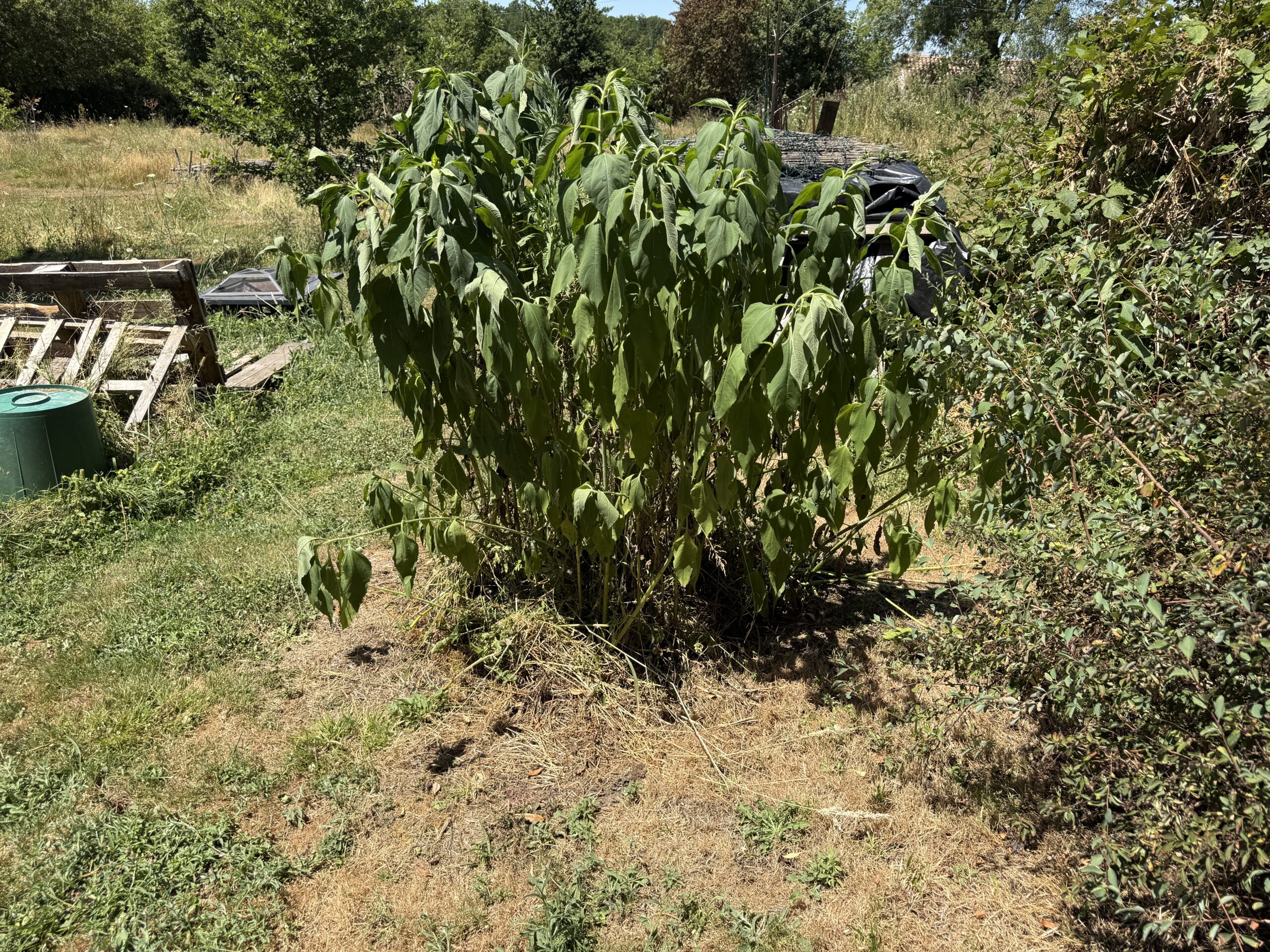
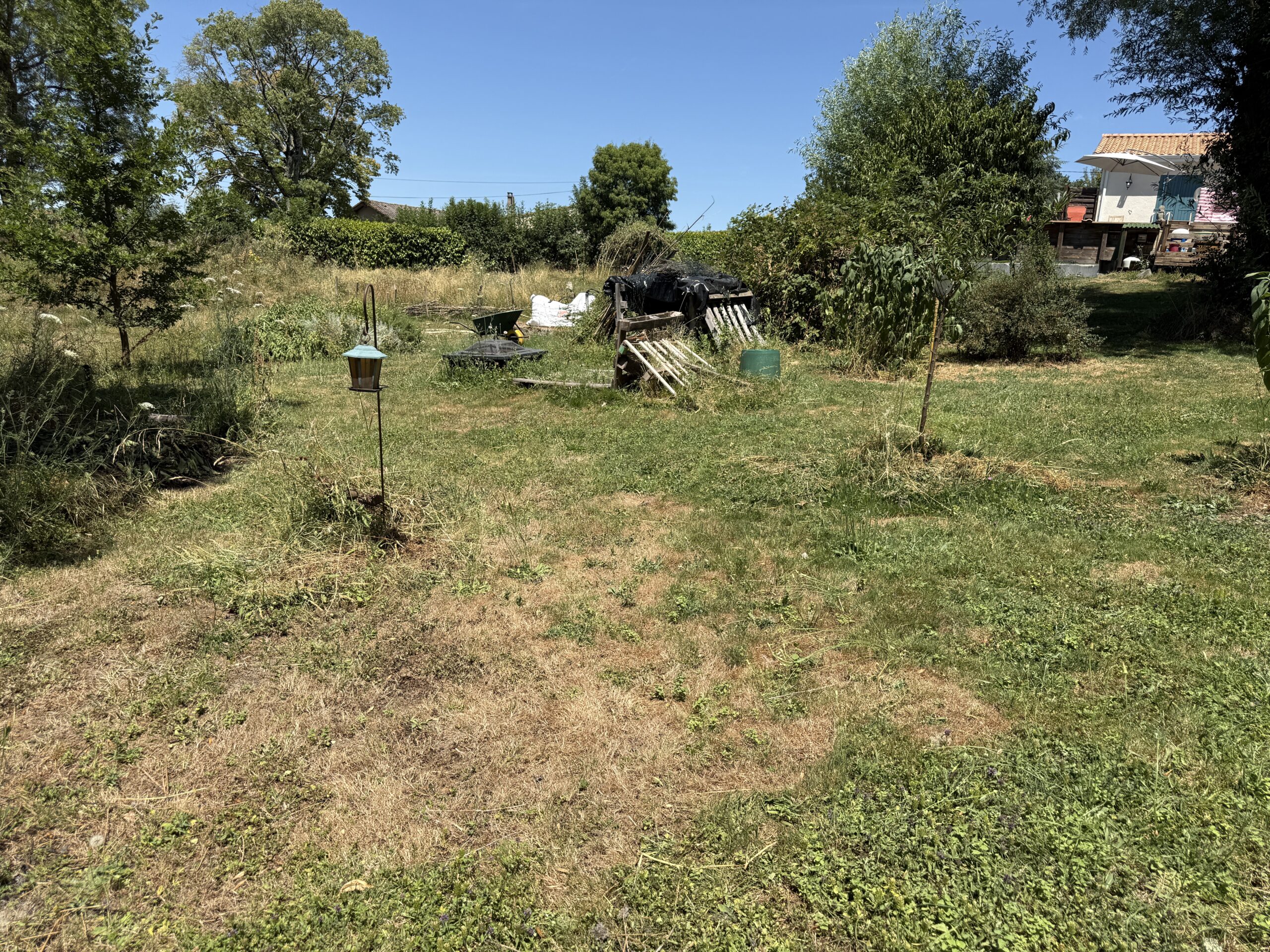
This is my first summer at Val de Foy, and nature has made sure I started with one of its toughest lessons: drought and scorching heat.
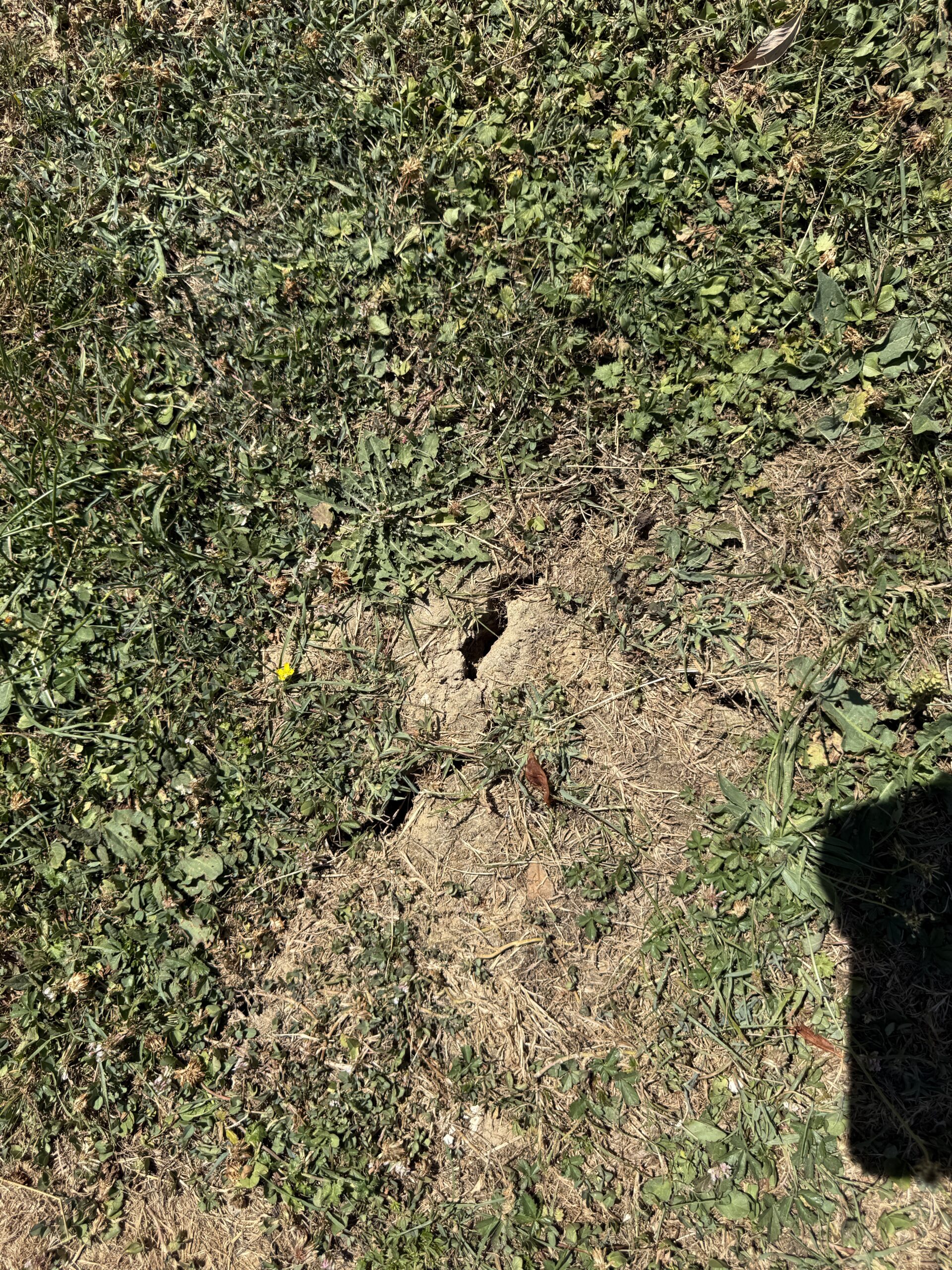
For days—and then weeks—the temperatures hovered around 40°C (104°F), sometimes even higher. Not the occasional hot afternoon, but relentless heat that seemed to radiate from every stone, every wall, and every patch of soil. Rain became something to reminisce about rather than something to expect.
Every day revolves around water.
To give the plants the best chance of survival, I water either early in the morning or after sunset, when the sun no longer scorches every drop before it reaches the roots. At times that means finishing the day with a head torch on, quietly moving from tree to tree in the falling darkness.
There is a practical reason for this. Watering during the cooler hours allows far more moisture to soak into the soil where it is actually needed, while reducing unnecessary evaporation during the hottest part of the day.
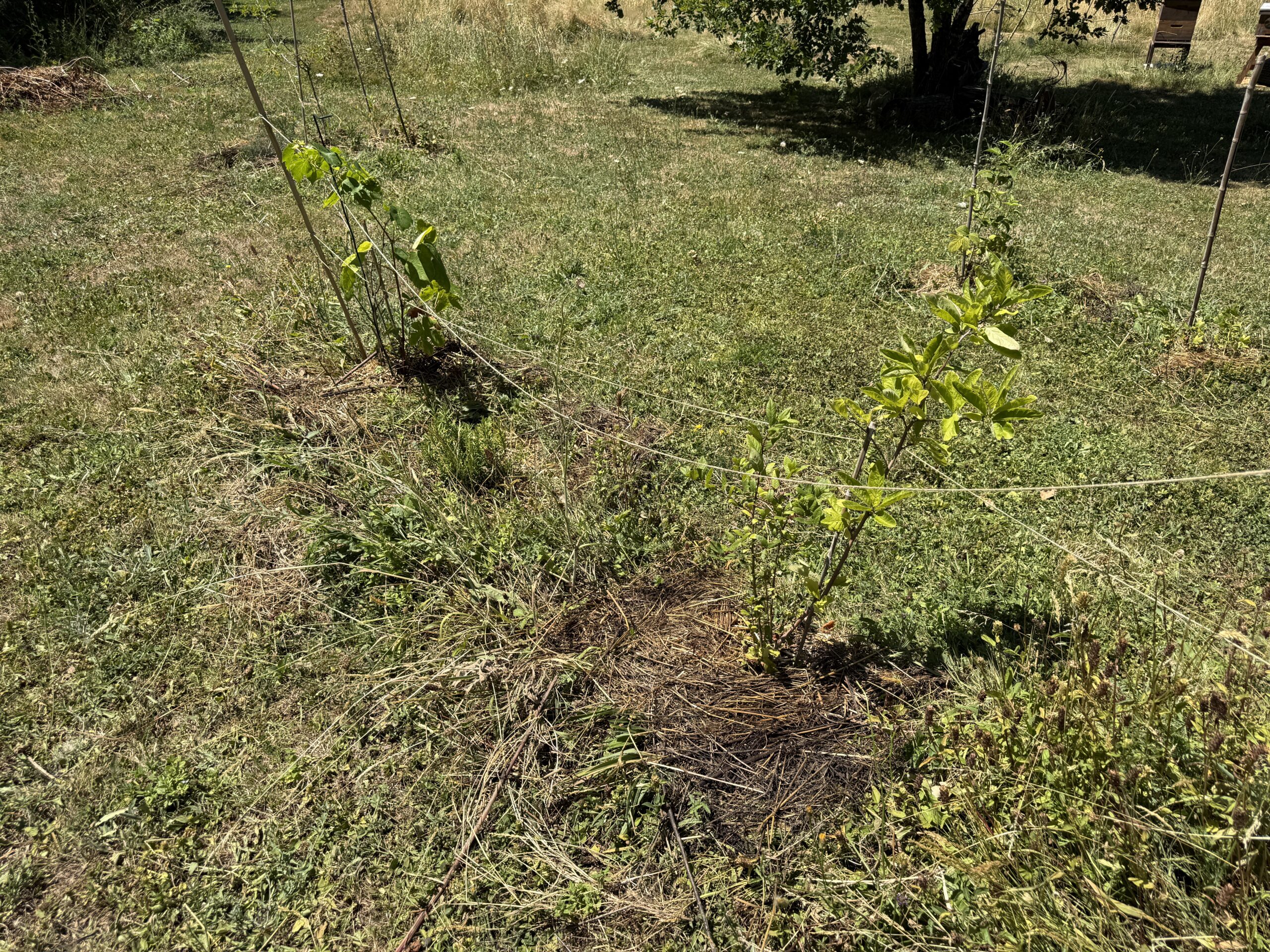
The young trees and shrubs I planted this past season have not yet developed the deep root systems that established plants rely on. They simply cannot survive this kind of prolonged heat on their own. The soil dries astonishingly fast, and every day without water can push a vulnerable plant closer to death.
So I fetch water from our well using a submersible pump, running long garden hoses wherever I can reach. The places beyond the reach of the hose receive water the old-fashioned way: watering cans filled from my IBC rainwater tank.
There is no automated irrigation system here yet.
But now that I am experiencing going through the watering efforts myself, I wonder wether this would be an advantage or not. In soms cases irrigation systems can turn out inefficient. Water evaporates before it even gets to the roots. And these young roots need wet feet, not just a bit of dripping. Quite simply my budget doesn’t allow it anyway. For now every litre is pumped, carried, directed, and poured by hand.
Many of the young trees receive between 20 and 40 litres of water every single day.
It is physical work. By the time the watering is finished—or before it begins again in the evening—the heat has dictated the rhythm of the day. During the hottest moments you don’t have much choice but to stay inside with all windows, shutters and doors closed to keep the heat out as much as possible. The hours where you can actually do something are limited and much dictated by keeping the plants alive by watering them, and letting the fresh morning air into your house (your important zone 0) to cool it down.
One lesson that has become even clearer this summer is the value of mulch.
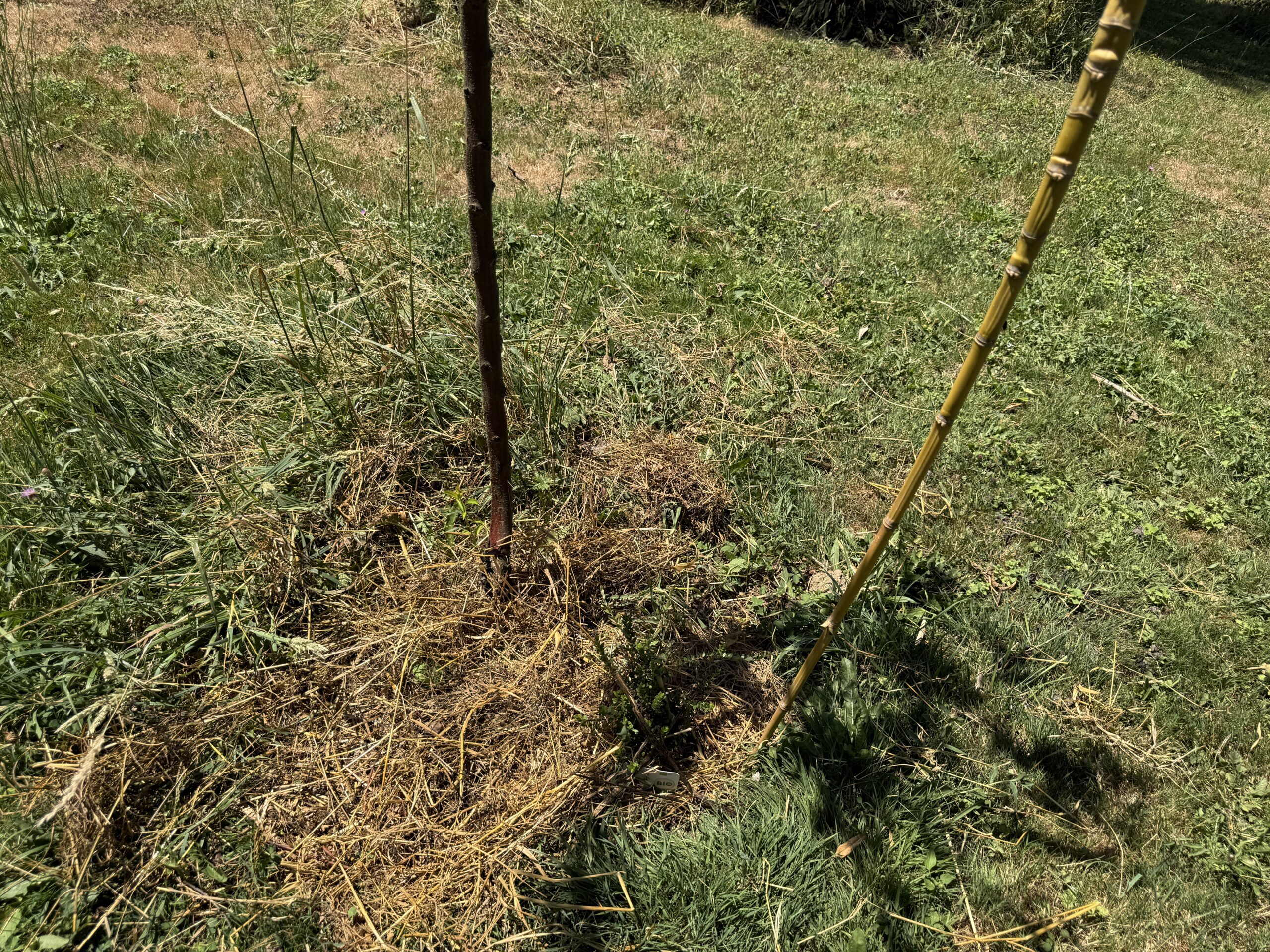
Mulching around young trees and shrubs does much more than help build a living, healthy soil. It also acts as a protective blanket, reducing evaporation and helping precious moisture remain where the roots can actually use it.
Bare soil around young stems loses water remarkably quickly under a blazing summer sun. At the same time, you don’t want vigorous grasses or other competitive plants stealing the limited water your young trees desperately need. A layer of mulch offers an elegant solution.
I’ve noticed that many gardens here in south-west France use extremely thick layers of straw—sometimes as much as 30 centimetres deep. Personally, I’ve chosen a different approach.
Rather than smothering the soil in one go, I prefer to add thin layers of around 2–3 centimetres at a time. Over the season these layers gradually build up, feeding the soil without suffocating it. I use both woody mulches and softer annual organic materials, allowing soil organisms to slowly incorporate them into the ecosystem below.
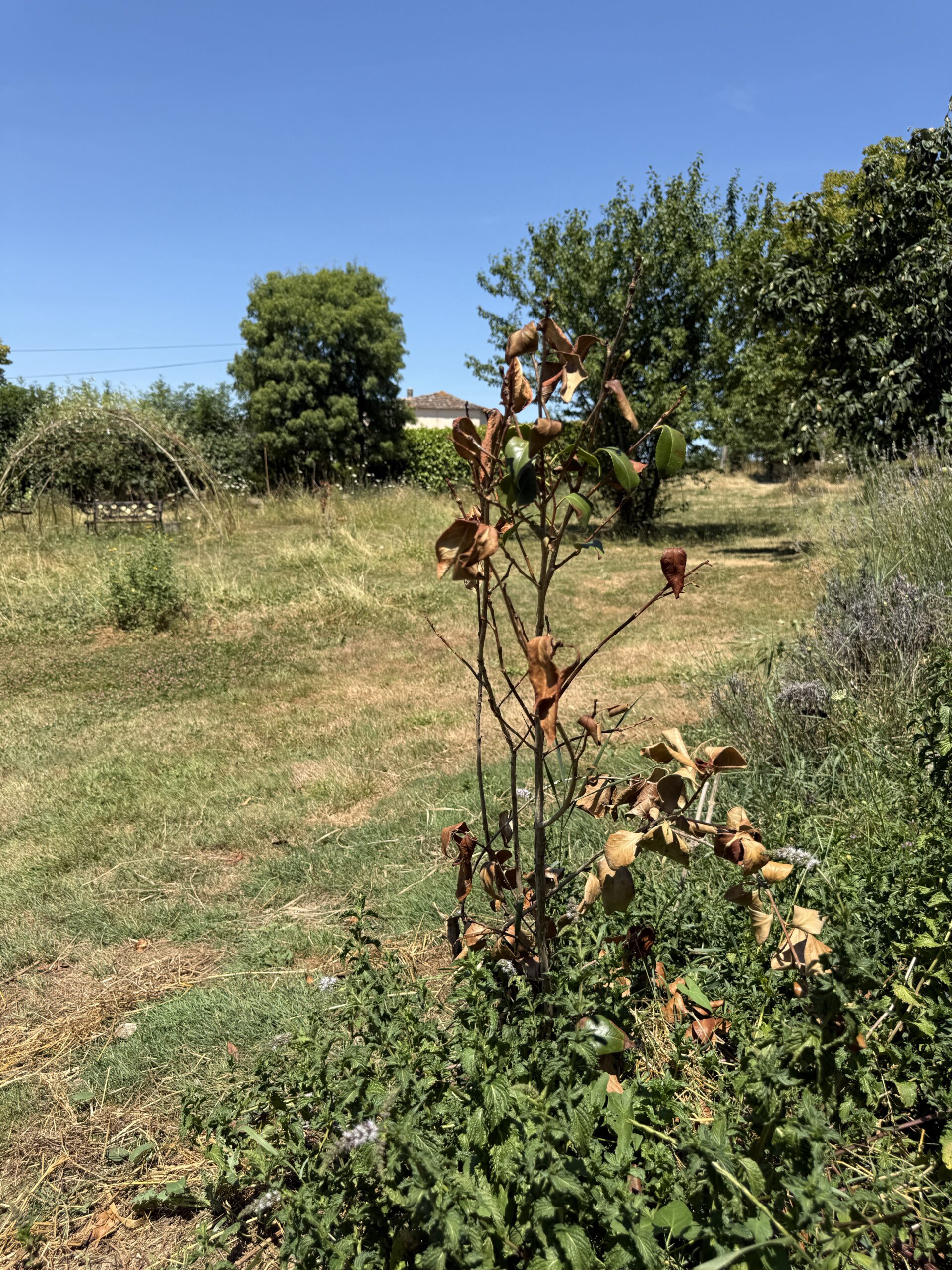
Some plants have still struggled despite all the effort. Leaves have scorched. Growth has stalled. A few have looked almost beyond saving.
And yet nature keeps reminding me never to give up too quickly.
Several plants that seemed almost dead have slowly started to recover as I maintained the routine. Tiny green buds appeared where I had almost accepted defeat. New leaves emerged from branches that looked lifeless only days before.
Life is remarkably resilient.
One decision I am especially grateful for now is that I resisted the temptation to plant everything at once.
When you start creating a garden or restoring land, it is incredibly tempting to go all in. To fill every empty space. To realise every beautiful vision immediately.
Instead, I planted carefully, leaving much of the property untouched for now.
Looking back, I am deeply thankful I did.
This summer has confirmed something that many experienced permaculture designers have long taught:
Observe before you design.
No amount of planning on paper can replace experiencing a full cycle of seasons on your own land. You need to know where the wind comes from. Which slopes dry out first. Where water lingers. Which trees cast valuable afternoon shade. How wildlife moves through the landscape. And, increasingly, how your land responds to climate extremes.
Climate change is not an abstract discussion.
It is here.
Gardeners, farmers, beekeepers, and land stewards experience it with every season. Longer droughts. More intense heatwaves. Sudden downpours. Greater unpredictability.
None of this makes restoration impossible.
It simply makes it more demanding.
The reality is that we cannot wish these challenges away. We have to work with the world as it is today while doing our part to shape a healthier tomorrow.
That means conserving water wherever possible. Building healthy soils that hold moisture. Mulching consistently. Planting thoughtfully. Choosing resilience over perfection.
Most of all, it means patience.
Because despite the hardships, I still believe deeply in nature’s extraordinary ability to recover—if we are willing to give her a helping hand.
This first summer has been exhausting, humbling, and at times discouraging.
But it has also been one of the greatest teachers I could have asked for.
The land is teaching me, one hot day at a time.
Want to learn about permaculture?
Book one of our options to learn more about what you can do on your land.