Home » Blog » Honey Bees at Val de Foy: Learning From a Living Ecosystem
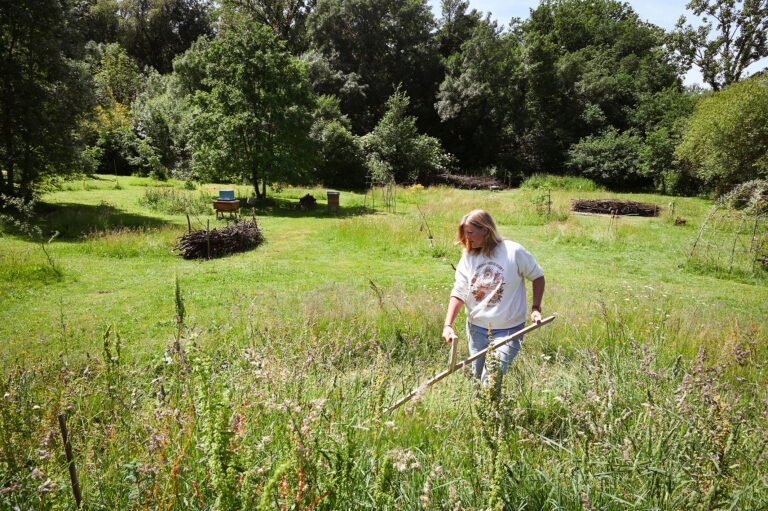
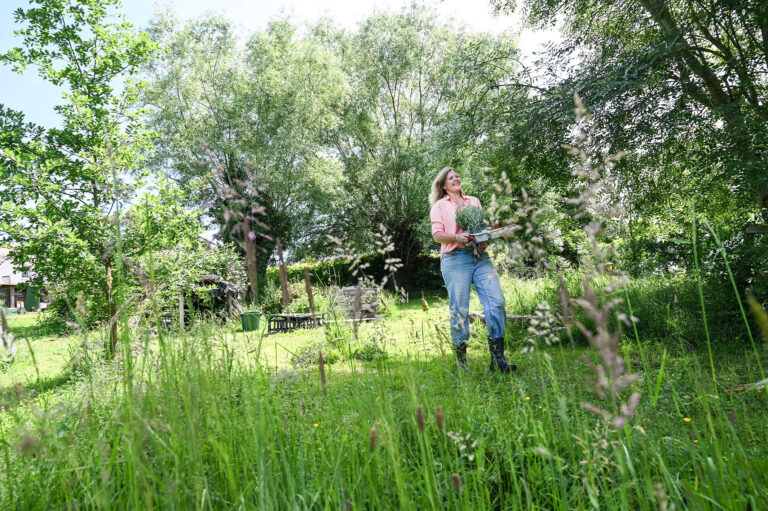
When we arrived at Val de Foy in South-West France, the land was already alive. This is important to remember. I did not bring life to an empty piece of land. Long before I introduced the first honeybee hive, this place was already home to an incredible diversity of wild bees, solitary pollinators, butterflies, beetles, birds, plants, fungi, and countless other forms of life.
Val de Foy was already a living ecosystem. One of the reasons I fell in love with it, and felt it’s strength and further restorative potential.
My introduction of honeybees is therefore not the beginning of pollination here, that was not my goal. And they are definetly not supposed to replace the wild pollinators that were already present. Instead, they are a new layer added to an existing web of relationships. Each with their own habitats, that can compete or coincide.
Hence with every new element we introduce, we also create new ripples in the pond, or questions if you like.
Because we are not the designers of nature.
We are part of nature, with our own quirky behaviours, and at the most, we are students of nature, definitely not it’s regulating factor.
With our so called given intelligence and senses, we need to observe, make choices based on the knowledge we have, and learn from the consequences of our disruptions. Sometimes we understand the effects of our actions immediately. Sometimes we discover much much later that reality was far more complex than we imagined, or we just chose to ignore it, because we preferred the quick fix we designed.
So, introducing honeybees is possibly a choice that is not without consequence. The first honeybee colony at Val de Foy arrived as a gift from my permaculture teacher, Taco Blom.
Calling him a teacher does not really do justice to his legacy. Taco is one of the pioneers of permaculture in the Netherlands and the founder of the Centre for Permaculture. He has dedicated decades of his life to exploring how humans can work together with natural systems rather than trying to dominate them.
For me, Taco is not just a teacher, but a mentor and an inspiration.
The fact that he took such a personal interest in my adventure at Val de Foy and entrusted me with one of his colonies meant a great deal.
This was not simply receiving a hive.
It was receiving a symbol of his trust, and a connection.
Bringing the bee colony to their new home
Picking up that first colony was an experience I will not forget. I collected the bees in my brand-new French plated car. To keep the colony calm and encourage the bees to remain clustered together, I brought cooling packs and taped them to the top of the transport box. Then, with the air conditioning set to maximum cooling—almost like a freezer—I began the 1.5-hour journey home through winding French country roads.
Suddenly, every corner mattered.
Every bump in the road felt different.
There is something very humbling about driving through the French countryside knowing that thousands of small lives are travelling behind you, depending on you to get them safely to their new home, whilst (myself) turning into an icicle in the cold airco. It was only 5 minutes before I arrived I remembered I had steering wheel and seat heating.
To warn other drivers, I made a handwritten sign and attached it to the back of the car:
“Attention, abeilles à bord — gardez vos distances.”
A small message explaining why this car might be driving a little more carefully than usual.
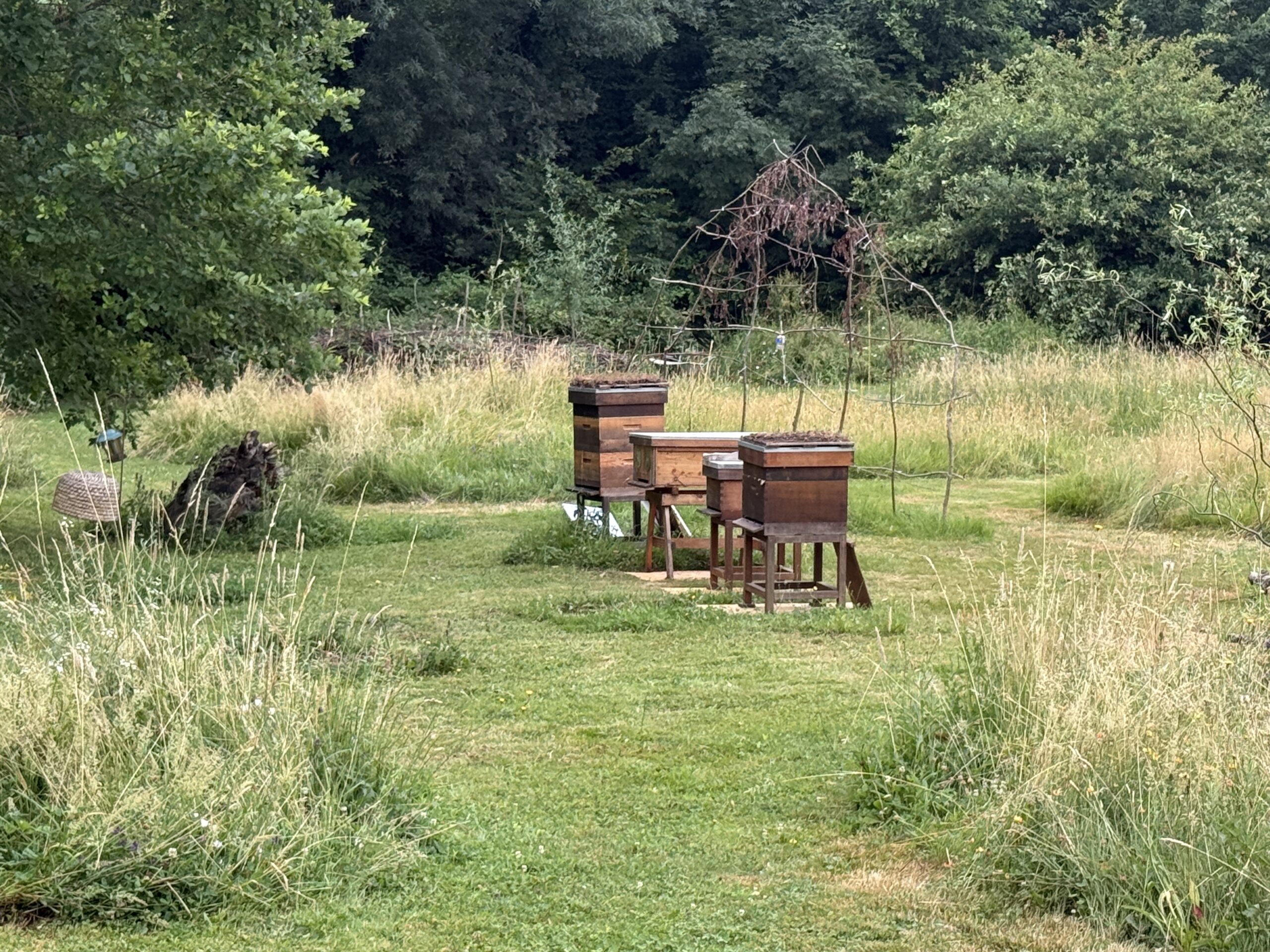
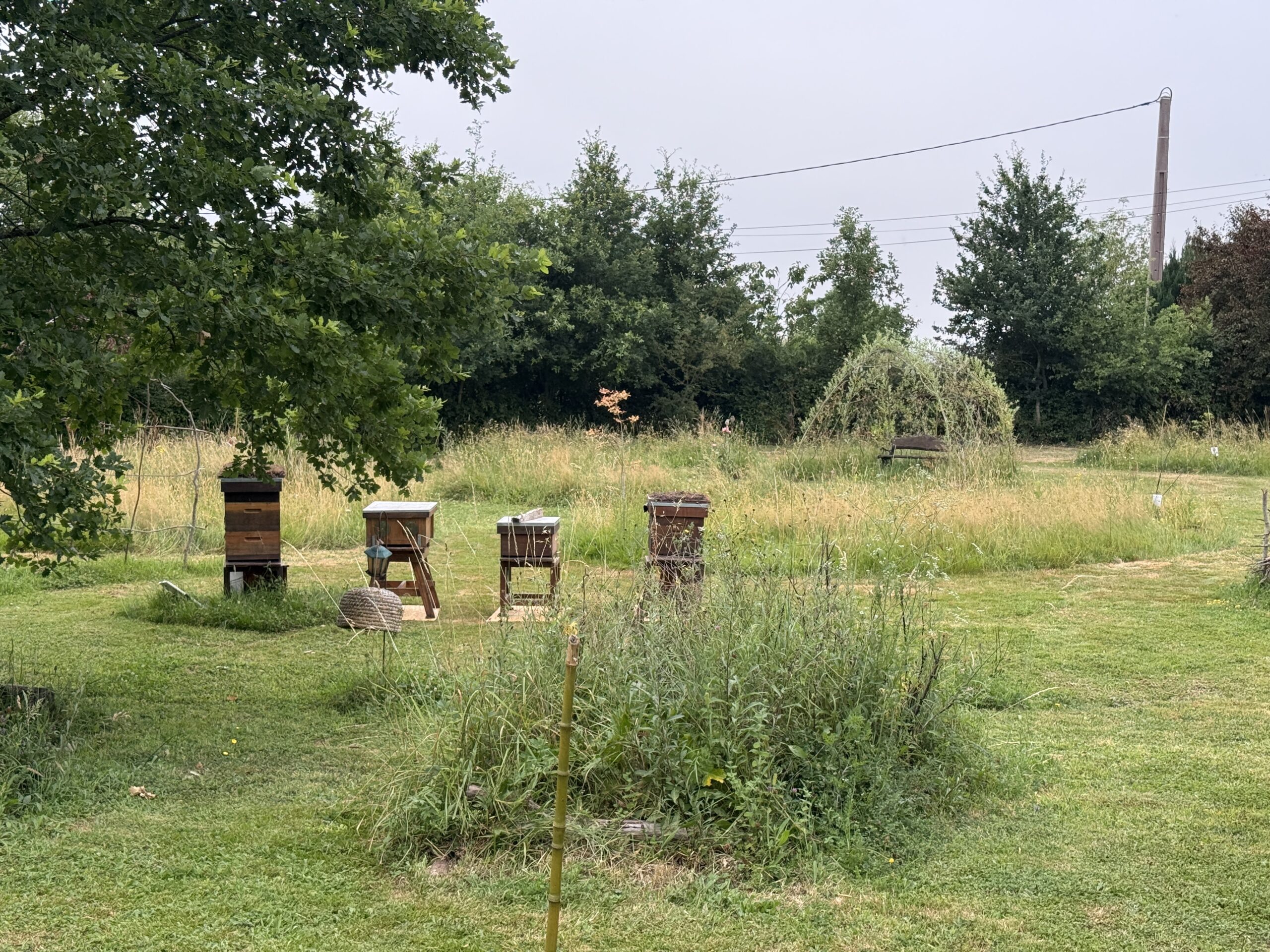
When I finally arrived at Val de Foy, I placed the colony in the heart of the land.
Together with some guests, we created a living screen from willow branches behind the hive. Not a permanent structure imposed on the landscape, but something that grows with it. The willow provides extra shade and protection, while slowly becoming part of the ecosystem itself.
The bees themselves are remarkable creatures.
They cope with heat far better than we humans do. A healthy colony has an extraordinary ability to regulate its own environment. Through collective effort, they ventilate the hive, circulate air, and maintain the conditions they need to survive.
Watching them work together is a reminder that intelligence does not always come from an individual. Sometimes it emerges from thousands of small actions becoming one living system.
When nature brought a second colony
As it turns out, if I hadn’t been gifted the first colony, a bee colony would have arrived sooner or later. Because just a few weeks after getting the first colony, the second arrived, but in a completely different way.
When my uncle and aunt travelled from the Netherlands with a trailer full of my beekeeping equipment, everything was temporarily placed in the grass.
Somewhere among the boxes and hive parts, a swarm apparently decided that one of the hive components looked like the perfect new home.
Nature literally delivered a colony to my doorstep.
I took the hive part where the swarm had settled, and brought it to the heart of my land, just like the other colony, grateful for this unexpected gift.
Two colonies, both arriving in completely different ways, and introducing the need for observing consequences for the diverse system, and answering new and sometimes difficult questions.
Honeybees, biodiversity, and finding balance
One of the things I find important is increasing biodiversity and resillience of the Val de Foy land and all its complex and diverse ecosystems. I don’t particularly want dominant species that take over the rest. One thing is for sure, at Val de Foy won’t be room for 10 hives or more, that would loose it’s point, and be more of a disruption than an addition.
Honeybees are valuable though, they are a wild part of the diverse ecosystems around us. They are a struggling species, just like many other wild beespecies are. Providing them with housing, and having learned to maintain them, provides a valuable service to their survival ability, despite being threatend by more and more factors, such as various invasive species and diseases. They are fascinating social organisms and can add an important layer to a landscape. Our relationship with them, connects us more closely to flowering cycles, seasons, and the invisible work of pollination and other wild insects.
At Val de Foy the land was already rich in wild pollinators before the first hive arrived.
My intention is not to replace that diversity, but to protect it. To find a balance where a modest number of hives can exist alongside the wild bees and other pollinators that have been part of this place for much longer.
But nature quickly reminded me that every intervention creates new relationships.
The arrival of the Asian hornet
This first season, the Asian hornet (Vespa velutina) discovered the hives.
Two nests (a primary and secondary nest) established themselves on and beside my land.
And suddenly I found myself facing one of the most difficult questions for anyone trying to work with nature:
When do you intervene?
When do you accept that you are witnessing a natural process? Even if it is the result of human interventions (globalisation: as the Asian hornet is a relative newcomer in this part of the world, and considered an invasive species).
The Asian hornet, known in France as the frelon asiatique or yellow-legged hornet, is an invasive species that places pressure on honeybees and many other insects. For beekeepers, the impact can be devastating.
One of my colonies became visibly stressed. The behaviour around the entrance changed. At one point, the bees produced a distressed buzzing that made me wonder whether the queen had been lost or whether the constant pressure had become too much.
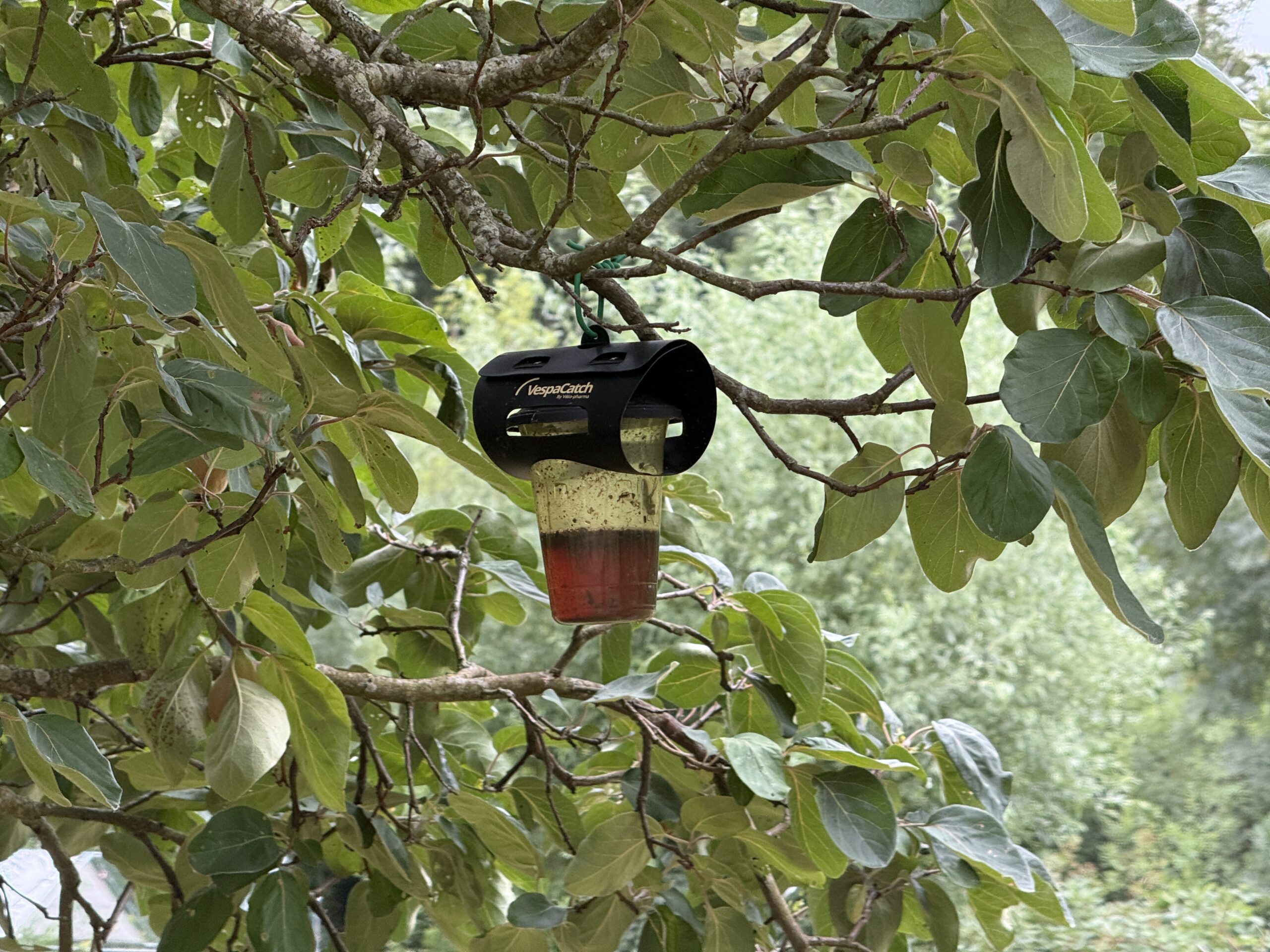
At first I decided to place traps around the garden to catch the asian hornets. The description on the package says that the traps respect biodiversity and give opportunity for other trapped insects to crawl out. Some fellow beekeepers know differently and make modifications to them, to ensure other insects can get out, so I watched the traps very closely.
Unfortunately within a day I found out that 20:1 asian hornets caught, were European hornets. This is not what we want to create, a decline of indigenous species that were previously in balance. So I stopped using the traps immediately.
So this example shows where simple solutions simply disappear. And so we have to look further, to find a right balance.
Are the honeybees creating an opportunity for the Asian hornet by concentrating food in one place?
Or are the hives in fact acting as a kind of decoy, drawing attention away from other wild pollinators?
Or have I unintentionally created a “honey trap” that attracts a predator into an ecosystem where it did not previously have such a concentrated resource and interest?
Are there simply too many Asian hornets?
Or are there too many honeybees?
Is the balance disturbed by my doing, or was it already disturbed, and was my intervention one that made it more visible, and even more disturbed by placing those traps?
Or is nature simply playing a much larger ecological chess game, with movements and consequences that we cannot yet see?
After barely completing one season, I do not have the answers. Fellow beekeepers don’t have the answers, ecologists don’t have the answers, scientists don’t have the answers, politics don’t have the answers. And even if we think we do, there is always a chance that much later on, we discover that our presumed answer, had much greater consequences further down the line. Such as using insecticides on hornet nests. I saw an exterminator miss the nest, and consequently it blew a big cloud of insecticide into the air, carried across the land by the wind. Whilst just one micron is enough to kill an insect.
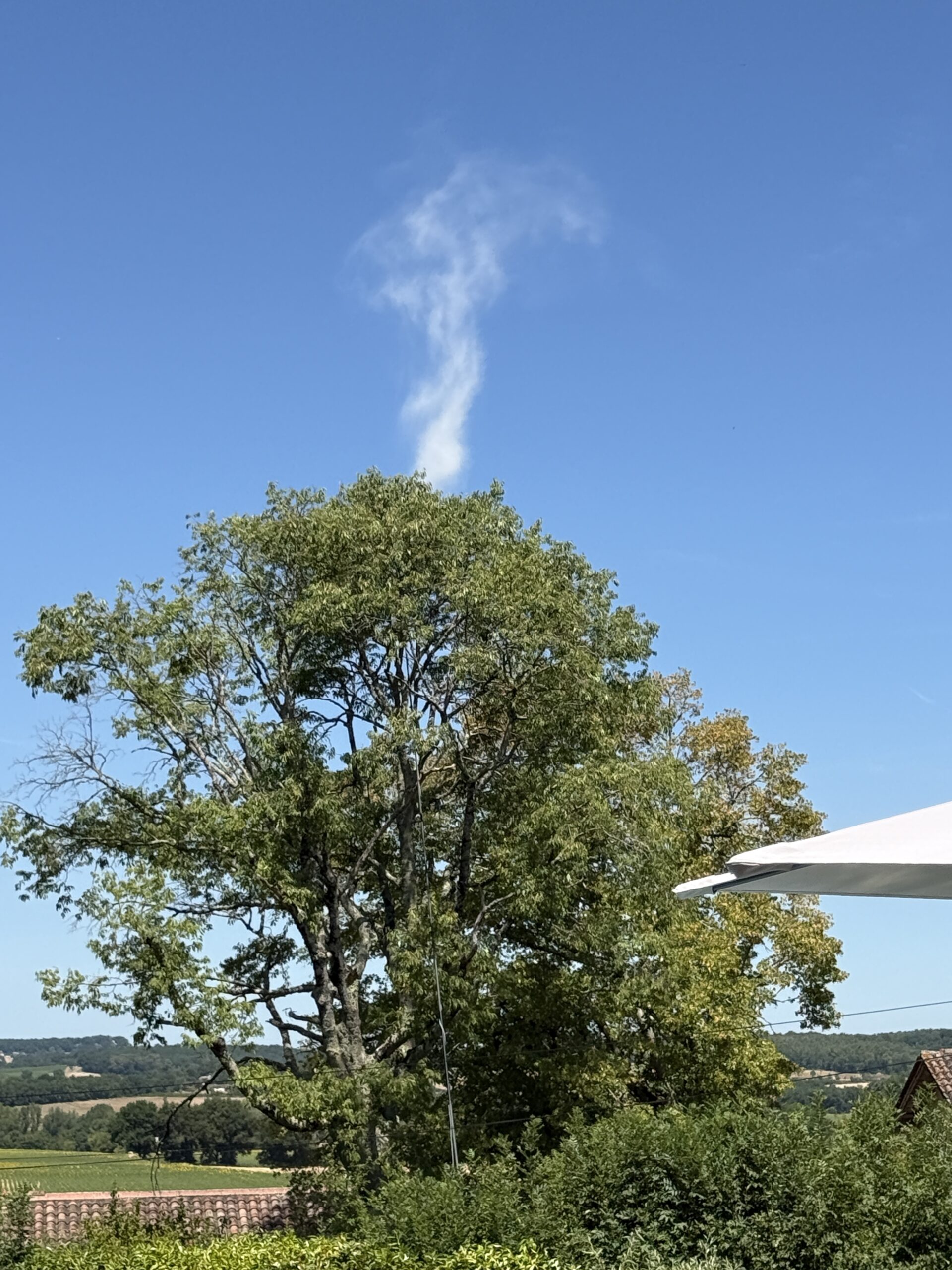
From a permaculture perspective, we should learn to observe, have patience, and trust more in solutions that come from nature itself. Eventhough we are told differently, humans should be very aware about the use of pesticides and how they accumulate in our ecosystem. It’s a tense topic, the asian hornet, brought to this continent by humans, on the one hand eating thousands of species of insects, 9 kilos per year, 30.000 honeybees per hive…but is our artificial treatment not hurting our ecosystems even worse?
In permaculture their are no dogma’s, that specifically rule out something, but the aim is to find solutions in nature, in eco-systems. If we don’t have the answer, we observe, we study, we stay patient. This may be one of the hardest things to do as a human, to not act immediately, but to wait. Sometimes only time will tell what will come next.
Summarising: The art of Learning instead of controlling
The human instinct is often to find a problem and immediately search for a solution.
But ecosystems are not machines.
They are complex, adaptive, and constantly changing.
Sometimes what we perceive as a mistake may simply be something we do not yet understand.
Sometimes nature finds solutions over time that are invisible to us.
And sometimes intervention is necessary.
The challenge is knowing the difference.
After removing two Asian hornet nests and observing the effects, I find myself questioning what my approach should be in the future.
Perhaps I will intervene again.
Perhaps next time I will observe longer.
Perhaps the greatest lesson is accepting that we are not outside nature, managing it from above.
We are part of it.
We make small choices. We observe the consequences. We adapt.
The bees of Val de Foy have already taught me this.
They arrived as a gift.
But also opened the door for new questions and observations.
So above all, they are teachers.
And I am aware that I am still learning every single day, no matter how much I think I already know. I often say: the more I know, the more aware I am how little I know.
What is your solution to these issues? Drop us a line, we love to hear from you!
Learn more about diversity and bees?