At this moment we don't have any surplus produce from our land to share. Please stay up to date with our workshops, consults and blogs in the meantime. DismissSkip to content
Plant trees & rewild the planet!
Forest edges are the most robust, nutritious, biodiverse systems on land. Forests manage fresh water availability, reduce CO2, manage their own healthy balance and cool the planet. Yet humans destroy 41 million trees every day. Let's rewild barren land, swap monoculture farming for mixed systems, stop the use of pesticides and plant one tree at a time.
Forest edges are the most robust, nutritious, biodiverse systems on land. Forests manage fresh water availability, reduce CO2, manage their own healthy balance and cool the planet. Yet humans destroy 41 million trees every day. Let's rewild barren land, swap monoculture farming for mixed systems, stop the use of pesticides and plant one tree at a time.
When people speak about permaculture, the conversation often focuses on design techniques: swales, food forests, polycultures, soil regeneration.
These are powerful tools.
But underneath these practical methods lies a deeper question: how do humans relate to the living world around them?
Long before permaculture became a recognised design system, many Indigenous cultures had already developed ways of living with land that maintained fertility, biodiversity and ecological balance over generations.
One of the most compelling voices connecting these traditions with modern ecological thinking is Robin Wall Kimmerer, author of Braiding Sweetgrass.
Her work offers valuable insights not only for readers, but also for anyone practicing permaculture or regenerative agriculture.
Many of the principles that guide permaculture today echo ideas that Indigenous cultures have lived by for centuries. One of my teachers, Menno Swaak, of “Edible Park” in The Hague, the Netherlands, gave me the book as a present, with the message to pass it on. The book captivated me, and brought me unforgeteable metaphors that guide me through my learning process. It’s a book I can wholeheartedly recommend, if you are interested in exploring our relationship with nature.
Seeing Land as a Relationship, Not a Resource
Why am I mentioning the phrase ‘relationship’, in terms of land? Well because modern industrial agriculture often treats land as a production unit, and from this we derived our Western doctrine about land not ‘being diverse and alive’ but being merely a resource to grow what ‘we want’.
Fields are optimised for yield, soil is adjusted chemically, and ecosystems are simplified for efficiency.
Indigenous ecological traditions often start from a completely different premise: land is a relationship.
Plants, animals, water and soil are not separate resources but members of a shared community.
This perspective naturally encourages stewardship rather than extraction.
Permaculture expresses a similar idea through its core ethics:
care for the earth, not as in a ‘solid’ state, but in it’s abundance of living species.
care for people, because we need to take care of our own ‘tribe’.
fair share, because we need other species within earth’s community to thrive as well, sharing recognises a mutually based dependence on each other.
Although these core morals are embedded in modern ecological design, these principles resonate strongly with long-standing Indigenous philosophies about living responsibly within ecosystems.
Observation Before Intervention
One of the first rules in permaculture design is simple: observe before you act.
This idea may sound obvious, but it runs counter to the fast-paced mindset of modern development.
Indigenous land practices have long relied on careful observation.
Seasonal patterns, plant behaviour, animal migrations and weather signals are all read carefully before decisions are made.
At Val de Foy, we aim to do the same. Although we try to make these lessons tangible, the reality is that there is so much that we don’t know, or slips our attention. Hence there are always big or tiny signs the land wants us to follow and read. If we allow ourselves to take time to sense it’s messages, we can learn about ourselves, our own characters, or what doctrines were installed in us. I had already gone through some of those lessons in the years prior to starting Val de Foy: due to my impatience, need to control and dominance in regard to some situations, I could sometimes overlook the details leading me to failure or marginal success. At other times my hunches were correct. What I’ve learned is to take a step back, take in, breathe, analyse and resonate with deeper dimensions of meaning. I think it has not only made me a better judge of my surroundings, but it also taught me to be humble towards what the land, other species and humans can teach me. And in this process I’ve become a more accessible person, in balance with myself and my surroundings.
So with these learnings, before I started planting extensively, I spent time watching how the land behaved through different seasons. Rainwater revealed natural drainage lines. Frost settled predictably in certain low areas. Sunlight warmed particular areas earlier in spring.
Instead of imposing a design immediately, the landscape slowly reveals its own logic. And I fully allow different eyes and hands to come in and resonate with me and the land to see how ‘we’ can develop our relationship with the land. I genuinely want to share this land, because my lessons resemble the journey that my students have to go through too. And as an ‘elder’ I want to share my knowledge and help guide this process.
Diversity Is the Foundation of Resilience
What my journey has taught me, is that our Western way of thinking, since the industrial revolution, or after the second World War if you like, when priorities were dominated by the idea that the masses needed to be fed efficiently and cheaply, we made a big design mistake: industrial farming arose relying on monocultures—i.e. large areas planted with a single crop.
This approach can produce high yields in the short term but often creates vulnerability to pests, disease and soil depletion, and is detrimental to biodiversity. In the Netherlands, and some parts in the US for example, we even made the mistake to remove natural brushes, treelines, and patches of wild nature, just to use every inch of ‘resource’ of land for production. Not surprising that 70-80% of biodiversity is declining or vanishing in these areas. The other big design mistake is the one dominated by trade and supermarket channels: that consumers would want predicteable homogenous foods, hence developing certain cultivars of foods that pushed out the immens diversity of species.
Indigenous agricultural systems frequently emphasise diversity.
Traditional cropping systems in many cultures combine multiple species that support one another. Plants may provide shade, nitrogen, pest control or structural support for neighbouring crops.
Permaculture mirrors this idea through polyculture planting, guilds and food forests.
At Val de Foy, diversity is one of the most important design strategies. Although at a glance the land is already beautiful in itself, the land is the result of intensive farming in the past. The forest in the back of the land consists mostly of ash trees and brambles. There is not a lot of diversity in the forest. So one of the things I did was take seeds that I saved from my walks through forests, with rosehips, seeds from different trees, and I spread them out along the line of my land. Some of these may root and form new plant variation in the forest. And to build on the strength of this pioneer forest, I brought in variations of fruit and nut bearing trees; apples, pear, hazelnut, pecan, plums, cherries, medlar, etc. And fruit bearing bushes: red berries, black berries, raspberry, grapes, blue berry. Around the base of the trees and bushes I spread seeds of various herbs that will grow alongside them, attracting insects and also protecting the earth and young plants, eventually forming layered new ecosystems.
In these new emerging systems there is more chance that crops will thrive, even though there would be a crop that struggles, there would be enough edible plants to thrive.
Diversity spreads risk and strengthens the system as a whole. The place where diversity fits is in the edge of forests, where fungi rich and bacteria rich soils come together, and where various plants can thrive in layers. This is what we as permaculture designers try to forge or emulate.
Taking Only What Is Needed
Another powerful lesson from Indigenous ecological traditions is the idea of respectful harvesting.
Many cultures follow guidelines such as taking only a portion of a plant population and leaving enough for regeneration.
This concept aligns closely with the idea of sustainability but adds an ethical dimension: harvesting becomes an act of responsibility rather than entitlement.
Permaculture reflects this idea through careful resource management.
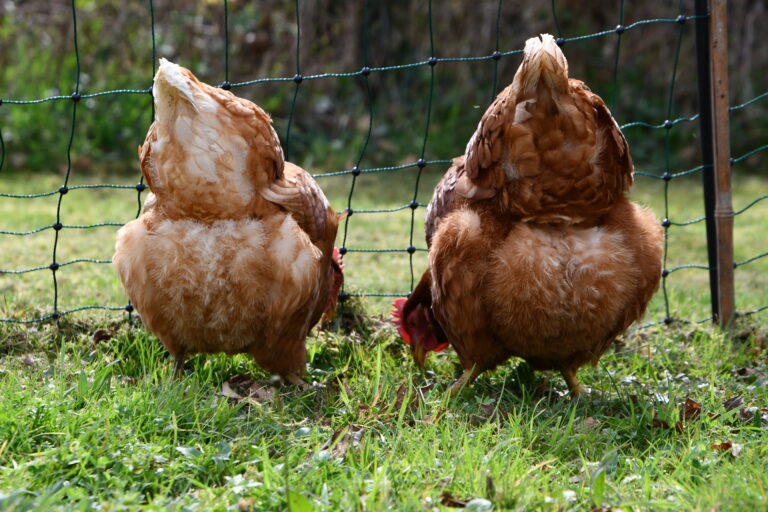
Instead of exhausting soil fertility or removing every available yield, the goal becomes maintaining the long-term health of the ecosystem. The core value ‘sharing’ is a big guideline regarding this principle, you leave plants for other species, or to be given back to the earth. We don’t see ‘leftovers’ as waste, instead organic ‘waste’ is food for the soil. We mulch, compost, or feed to other species, like our chickens, fungi, insects, nematodes or the worms in the soil….
When soil becomes richer, more diverse, visibly alive, year after year, the system is working.
Gratitude as an Ecological Practice
One of the most striking ideas in Kimmerer’s book Braiding Sweetgrass is the role of gratitude in ecological relationships.
In many Indigenous traditions, giving thanks to the land, plants or animals that provide food is a normal practice. For instance, Kimmerer always carries a bag of tobacco leaves with her, when she harvests something, she leaves some tobacco as a sign of gratitude.
At first glance, gratitude might appear symbolic rather than practical.
But it subtly influences behaviour.
When people feel grateful for what the land provides, they tend to protect it more carefully.
In permaculture, this mindset often emerges naturally.
Watching soil improve, biodiversity increase and plants thrive creates a sense of partnership with the landscape. The signs and feedback that it gives literally gives joy, for example seeing a rare mushroom appear in the forest edge, knowing it’s there and carefully avoiding crushing it with your feet.
The land is no longer just something we work on—it becomes something we work with.
Learning From Older Knowledge Systems
Permaculture is often presented as a modern innovation, but in many ways it rediscovered older ecological wisdom. In fact much of what we need to learn, was already described centuries or just decades ago. Hence some of the best learning books can be found in second hand bookshops, like “A healthy garden through mixculture” from Gertrud Franck, or “Fertile agriculture” from Rudolf Steiner.
Eventhough our Western culture describes itself as superior to its ancestors, we should be more respectful of the traditional knowledge systems developed and passed on over centuries through direct observation of local ecosystems.
They contain insights about soil, climate, plants and wildlife that modern science is only beginning to rediscover.
Rather than replacing scientific understanding, Indigenous knowledge and ecological science can complement each other.
This integration is exactly what makes the writing of Robin Wall Kimmerer, an indigenous Native American who was taught plantecology through the eyes of Western science, so powerful.
She demonstrates that scientific research and traditional ecological knowledge are not opposing perspectives.
Together, they create a richer understanding of how ecosystems function. Her book Braiding Sweetgrass, describe many incidences and metaphors that illustrate this perfectly.
What This Means for my initiative Val de Foy
For an initiative like Val de Foy, these ideas shape how the land is approached.
But the deeper influence comes from adopting a different mindset.
Working with the land rather than controlling it. Observing before acting. Allowing ecosystems to evolve over time.
These lessons are not new.
They have existed in many cultures for generations.
Permaculture simply gives modern language and design frameworks to ideas that humans once understood instinctively.
And perhaps the future of sustainable agriculture lies not in inventing entirely new systems, but in remembering the wisdom that has always been there. 🌱